
 Apple Podcasts

 Spotify

 iHeartRadio

 Audible

 Deezer

 Amazon Music

 YouTube
 RSS Feed
Tim Schmoyer and the Dark Side of YouTube, Fame and Success…
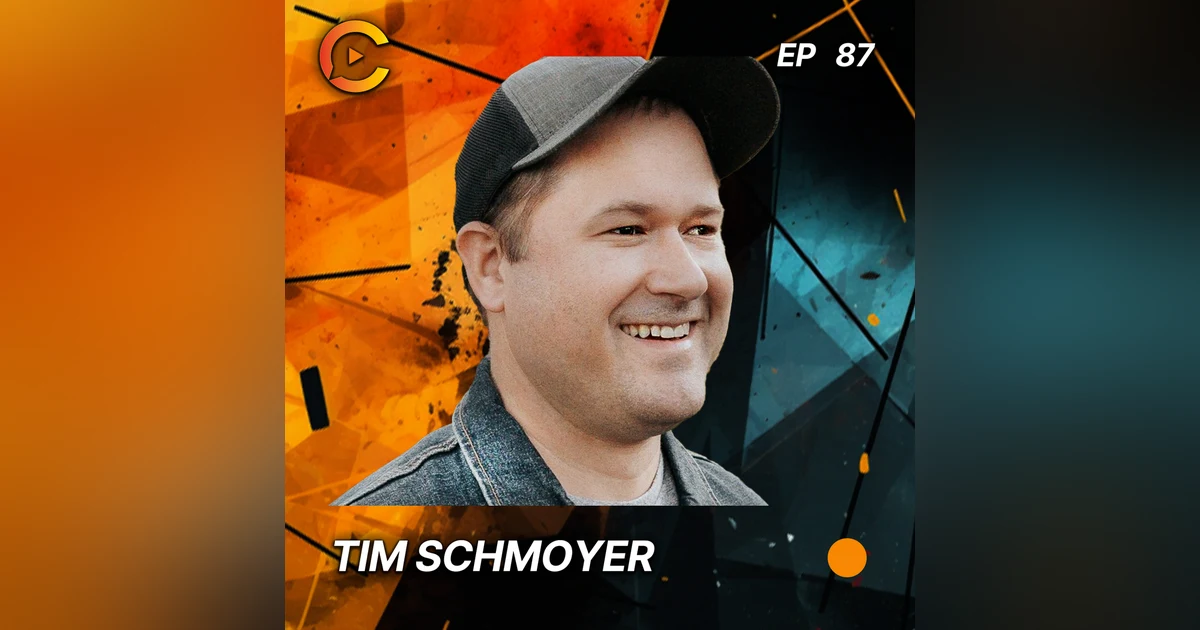

Tim Schmoyer has been a YouTube educator for well over a decade as well as a family vlogger and he takes us through the ups and downs of creator mental healthy, the impact to families, and how pulling back from YouTube and business saved his marriage.
Resources Mentioned:
- Awesome Creator Academy
- 1of10.com
- Brand Deal Starter Kit
Sponsors of the Podcast:
1of10 - https://geni.us/get1of10com1of10 is the BEST tool for YouTube Strategy and helping you find outlier videos that will get more views. Find inspiration for your Topics, Titles and Thumbnails and stop guessing if and idea will get views and start knowing. Use Discount Code ROBERTO at checkout for 50% OFF.OpusClip -https://geni.us/getopusclipRepurposing your content to every platform possible, is one of the fastest ways to grow your reach, reputation and revenue. OpusClip uses AI tools for nearly perfect repurposing for short form vertical videos, wide screen clips and can help you with scheduling your content across your platforms, making it automated and easy.Kajabi -https://kajabi.com/robertoblakeThe perfect all-in-one solution for your online business is Kajabi, offering Courses, Cohorts, Coaching and Community all with no-code tools, unlimited video hosting and built-in email marketing!
Visit Awesome Creator Academy and consider joining the Academy Pro Group if you want to become a full-time content creator and increase your Reach, Reputation and Revenue. We have a community of 100 Members just like you who want to learn more and earn more.We meet twice each week for Office Hours, we offer a library of over 100 Hours of Exclusive Training in all things content creation for our Pro Group Members, and have our Accountability Club where you can check in with your peers and stay on track with your projects.You can also post any and all questions and get feedback on your work daily through the private group where you peers can offer critique and constructive criticism.Check out https://www.awesomecreatoracademy.com/group for more details.
If you're looking to just get started and don't want to make a huge investment, but you know you need direction and guidance, check out my book Create Something Awesome: How Creators are Profiting from their Passion in the Creator Economy.
0:00 Hey everybody, this is Roberta Blake help you create something awesome today with the amazing and talented Tim Schmoyer, my good friend. How are you doing? Today I'm all right. I preferred your first intro though, no? Maybe that'll be in a blooper. Reel of some kind, but we're here at social media marketing world, hanging out, catching up. After the last conference we were at, Tim, I wanted to talk with you about something a little bit more serious that the audience might enjoy and everything like that. You've been a content creator for how long, Tim? I started 2006. So OG original YouTube. Right after YouTube launched a few months later. Yeah, so that would be about like 17, almost 18 years now. Really. Yeah, it's been that long, dude. We're coming up on like. 2006 yeah, 16 to 23. Wow.
0:42 Yeah, it's been a while, dude. That's I did not realize that. No, right. And you've seen like you've seen like 3 different YouTube CEO changes. You've been there, you've seen it all, largely done it all. I would say at the point, tell me something, Tim, like in terms of like creators and having a long lasting career as a content creator, what are like some of the ups and downs and like what's the real stuff that most people don't talk about or don't see behind the scenes? That's a load of. Question. See, there's the. There's a lot to that. There's a lot. So there's a lot of good stuff. You know, I've, I'll say this humbly, made more money than I ever thought I would ever make in my entire life. You know, same ever when I first started on YouTube, I was making $14,600 a year full time.
1:29 You know, just got married. So my wife had the work and but and I thought, you know, as a career wise. Literally like college kids slave wages my friends I was. Doing I was a youth pastor at the time in the church and they offered that's what they paid and for some reason I should not have said yes, but I did, you know, so that's a whole other issue. But, and so there's there's certainly that which sounds like it's a huge perk and it is in some ways, but there's the the same more, more money, more problems. More money, different problems is like what it really comes down to. Most people do not realize that. Is very much true as well. So there's, there's a so that's, that's a plus side of it.
2:10 Another plus side is I get to meet and hang out with amazing other people and a lot of my friends and my relational network is wrapped up in this. Niche or same? I've met creators, the best people in my life, because of this, yeah. Yeah. And I also really like that I get to serve people with content at scale in some way of creating content that really helps people. And my mission is reach people and change their lives and try to make content and train other people to do that too with their content so that we can all make the world a better place than it was before with through this medium. So there's certainly a lot of perks to it and I don't. So I want to start there before the rest of this goes, you know, so there's a well, most people I feel like are looking at being a full time YouTube creator and, and things like they have a lot of stars in their eyes.
2:59 And, and, and it's kind of like when you're a native kid, you're native kid. Yeah, 8484, OK. Don't worry about the same age, right? 80 yeah, yeah, yeah. So I it was like when we were growing up it was like being a rock star, yeah. And and then it was like being a movie star, you know, And then I was like being a YouTube star. And on the outside like that stuff looks awesome. And there is a lot of good good you could. But it's like, you can do it the world, but it's like being a Disney kid and everything like that. It's like, oh man, gotta go crazy afterward. Yeah. So I guess kind of jump into the the weeds of this and part of my story is that after making about 4500 videos across 9 channels over the course of thirteen years, this is a few years ago now. I woke up in the middle of the night just with a like it felt like my stomach was just clamping down on this double edged knife.
3:53 I looked like it was like 3 in the morning and I expected to see like something poking out of both sides of my body. Right. You expected some gruesomeness to be like. I've never felt anything like before. Yeah, no. It was like I swallowed it and it was like, anyway. And like when someone was constricting, it was terrible. And I couldn't stand up. I got out of the bed, I rolled out of the bed and I literally crawl across our bedroom floor going to the bathroom thinking like, yeah, I don't know. Yeah, it wasn't that. And then it was getting worse. And so I was like, ended up like army crawling across our bathroom floor, across our, our bedroom trying to wake up my wife. And she's like, what are you doing? Like I'm on the floor, like pulling on the sheets, you know, trying to wake her up and she's like, what are you doing? I'm like, I got out of the hospital. I'm not.
4:35 And I'm not like, I'm pretty high pain tellers. I in fact at that point hadn't seen a doctor in like 6 years, you know, so. Go see a doctor, everybody. Well, yeah. And that turned out to be a problem because I couldn't go see the doctor later because I had to start over like the new patient survey and. Like all that stuff all. Over again before I could get. Yeah, this. See, This is why you got to go and do the physical every year and everything like that, Roberto says. As he hasn't actually done it. And like, easy to preach, yes, so. So anyway, call the doctor and call and by the time they, they called back about half hour later and the pain was subsiding, thankfully. So I didn't go to the emergency room, but I did go see a doctor and I did see a therapist also because I was like, I don't know.
5:16 And, and both of them were like, do you have any stress in your life? And I'm like, no, not, not really. Like I feel fine. And they're like, well, tell me what's going on. And so I started telling them like, you don't have any stress in your life. I'm like, no, they're like, you are in denial. Like, OK, what are you talking about? I was so good at burying that stuff and not feeling that stuff, but my body was feeling that stuff. Do you feel like, do you feel like a lot of us as like entrepreneurs and content creators that like our, our delusional like mindset allows us to like achieve like all these great things, but then we also self delude and we don't have a certain level of self-awareness sometimes. I don't know. That's hard to say at like a categorical level for me.
5:59 Yeah, probably. Yeah, I was, I was very much like put your head down and just work and drive and go bigger and further, faster and. Yeah, all the things. That's fine for a period or a season of life, like if you're just launched out as a new content creator and 1st and you just now became full time, whatever, there's there's a. Like the season of hustle season? Shouldn't like not making a whole life 13 years of it. No, no, I would recommend just kind of parenthetically here that that's your situation. You put a date on the calendar that you and if you're married your spouse think is appropriate of like you can hustle for this long at this pace. But if this date comes and you're not full time yet, or that date comes and we haven't, you just go out like it doesn't matter. We're backing off because sacrificing your life and your health for this is totally.
6:50 So now we're. Yeah. So I ended up doing mostly therapy and the physical stuff was stress related. Person Therapy. And yeah, and so I meet with the guy I used was vocal so but some it was sometimes over zoomed, not all the time, but yeah. So depending on schedules and things and travel and such. And the, the short story is that I have been driving so hard for so long to sacrificing so many other things that I didn't, my body just collapsed and something had to give. Something had to like, I can't keep going at that at that pace.
7:31 And for me, the thing I gave up, honestly, was content creation, you know, and thankfully, by that time, I had a good sustainable business around the channel. I wasn't the only host or personality on it anymore. And right. And I stepped away for six weeks pretty quickly at that point. And the thing kept growing even without me. And I came back after completely like I didn't even check in on Slack or anything. I was like completely gone. I had to decompress and, and came back and things were still going great, which as a business owner, you're like, great, that's awesome. Yeah. I got to that point. For me, though, I was more like, they don't need me, you know? And then there's another class that I had to deal like, yeah. It's essential. Crisis, lack of purpose, subconsciously sabotaging things in the business so that you would feel needed. Yeah.
8:17 So these are the types of things that you don't really think about as a content creator. And I think being a content creator reveals so many unhealthy beliefs we hold about ourselves. Let me say this It can. It doesn't necessarily have to. I think it generally has and. If you're open to it and open to those, those conversations risking vulnerability, you know, whether it's like, hey, I'm really doing this because I feel insecure and I need the Internet to make me feel good about myself, or I'm, I'm ultimately doing this not because I care about people, because I care about money and I heard I could get rich quick doing this or I'm ultimately doing this like why like, and for me, I had a pretty good why I think your. Motives and your like, you know what? You reveal some of your motives, but also what drives you and where your priorities might be in life. Yeah, for whatever reason.
9:04 I think it's important to be gut level honest with yourself about what's really driving you, What's, why are you actually doing this? And if, if the thing that you're really chasing after went away, like would you still be doing this? What would you be chasing instead? And it's, I think it's easy to look at the, at the numbers, at the popularity, at the, at the money, at the, all the fame and the fortune and stuff and be like, I want that. And I get that, but that does come with a cost. And this is maybe another story, but honestly part of the story is I was away the trip a few years ago at a convention and I came home. I wasn't sure if my wife and kids would still be there.
9:45 You know what made you have that thought? What made you have that first thought That when I get home, my family's going? To it was it's a history. There's a history, a longer story there, but my wife and I were going through as a lot of junk was coming up for me. A lot of junk was coming up for her too, and things that weren't unhealthy. And me, we're impacting our family in ways I didn't, I I couldn't have known before and couldn't have seen before going through. A Was it just like you couldn't know because you weren't present or because you weren't in the mindset before therapy gave you like some tools? It's because we all have wounds. We are all wounded somewhere by someone or something at some time into like emotionally. Yeah, especially as as kids when we're growing up, whether it's a teacher or a parent or an uncle or a friend or whatever. And we don't realize, Yeah, even if it's not like huge trauma, like just like a, a series of lots of little hurts can add up over.
10:41 Time. Oh, yeah, no, that's called like, yeah, you can fragment things and everything like that. Things chip away at you, add up. It like weakens the structure of anything. Sure, there could be like an instance of child abuse or neglect. That would certainly be trauma, but it could also be lots of little things. So those things add up and we and we Start learning how to cope and deal with the world around us based on those lenses that we develop. And and when we're younger or going through the pain, like those lenses serve us really well. Sometimes they keep us alive. Yeah, because we actually need those in order to cope with the pain or cope with the. Be functional. Yeah. And, and, and so those, those addictions, those things that come up are actually really, really they serve a purpose.
11:23 Like they all come up for no reason. But over time those things switch. And because what we used to actually keep us alive in some cases actually becomes the things that starts killing us in our relationships and our ability to connect with others something. That serves you ends up. You end up serving it. Later, it ends. Up enslaving you in a way and some of those things. I had a lot of those things and and there's no way to know what they are until you start seeing the consequences your work. And your career can serve you. It gives you this money, it gives you the security, gives you the safety and everything like that. But then it's like instead of you owning it, it starts to own you. It starts to possess you instead of it serving you. And it's like, oh, it's serving me. It's helping me. It's making my life easier. It's giving me health insurance. It's doing all these things for me now. It's like, Oh no, no, no.
12:06 Now I'm beholden to it. I'm serving the thing instead of it's serving. Me, I, I feel fairly confident in saying no one has the self-awareness at a deep enough level to know if they're in that situation or not existing. You know, it takes a third party who is trained and can listen and knows what to look for and knows the right questions to ask that can bring you to a point you're like, oh, shoot, you know, whoa, what do I, what do I do now? It's not fun. It's not, it's not easy, but it's good. And, and so wow. So my wife has those things. All of us have those things. You have those things. I don't know what yours are. I don't need to know, but but all of us, like I don't know, you can get through life without being wounded in some way.
12:49 And those wounds and the things you have to protect yourself eventually impact, usually negatively your, your relationships and how you perceive the world, why you work, what drives you. It doesn't. And there can be a lot of good stuff in there, like reaching people and changing lives, but there also could be a lot of stuff in that's that's not. And so when I, to answer your question, when I, I came home, because my wife and I were both in the middle of, of working through some stuff individually, separately, she has her wounds, I have mine that we're working on healing and, and those were impacting our relationship together too. We've been married 17 years, 7 kids. Wow, that period of time, 7 kids in eight years. That was an intense season of life. It's a lot.
13:30 So you have. A couple of twins, though. One set of. Twins. One set of twins. OK. Twins. Yeah, so and so is in the middle of that. I came back and I was just like, I don't know. And we had some pretty rough phone calls and conversations while I was gone to and, and she was very hurt by me and others in the past that I was like digging a knife into those wounds unknowingly, not intentionally. It's just like, that's just, it's just you lived with someone for 17 years. You know, there's no wonder the divorce rate is so high and people who don't get divorced are so unhappy and are having affairs and things outside of it is because they don't, they're not working through these issues. Would would you say that like content creation took you away from being present in your marriage and in your family as your career escalated? I would not say that.
14:17 I would say it it made me feel valid outside of where I should have been getting my main validation from, which is family inside. Yeah, the people who actually know and care about the real me, not the person I was delivering to the people. Around the utility that you. Provide like, yeah, the usefulness. Like what? We're, we're men, We're validated by our utility. We want to be useful. We want to be helpful because what's the point of us being around is how we think what we don't, we're not validated by just being present or existing. We have to be functional. That's just how men develop psychologically. And so when that source of your validation, a lot of people, they get it from their work and their employee.
15:00 If they're an entrepreneur, they get it from running the business. Content creators, we're getting it from, yes, the business we built, but the fact that we also have this collective mass audience. Sometimes we're full time containers, this massive audience, the if we're speakers, these cheering crowds. And there is something addictive and seductive about that because there is a dopamine here. We all want that. And needed and special and that is that's why. Everyone wants to be a musician and a rock star. And I think because you want you want that. Everyone wants that. Like secretly everyone wants that. And then there are some of us who publicly actually achieve it. But there is a cost. Everything's equipment exchange. There's a price that you pay, Yeah, some people go a little too far. Some people sell their souls. Some of the creators I know are most successful are actually the most lonely people in the world. Oh, yeah. Because they don't know. Do people like me because of me or because I have these cool toys or because I have this audience or. Yeah, because I'm popular and, and, and they're just hanging out with me because I make them feel special, correct. And, and and so it's a very, it's a big tangled web, But so there is a dark side to all this. But I do think it can be this.
16:00 Episode The Dark Side of YouTube. It can be addressed by embracing humility personally, by embracing A teachable spirits and attitude. And I think one of the best investments you can make in your career, just whether it's on or off YouTube is, is becoming a healthy individual by letting like giving someone else access to poke at the things that you don't want to address, you know, and the things that you deep down. And even if you don't like, I didn't even know what all my issues were. My therapist was playing out, but I knew what the what the symptoms were. And even just poking at the symptoms with someone with someone else was like helpful enough to like, yeah, get me to a place where I want to start addressing this.
16:40 I'll start dealing with this stuff. And so anyway, I'll have to Fast forward. I kind of want to end it on dark note. No, no. And I think we've still got some time, but this is fascinating. Yeah. So I guess to kind of continue that story before we get to the light at the end of the tunnel is that I stopped making content and team kept going and I start focusing on the things that we all say actually matter, but we don't live our lives typically as they actually do matter. Yeah. Like we would say health and fitness matters. And, and, and honestly, part of my, my journey is like, I'm almost the heaviest I've ever been right now and I'm getting it. But I'm just last week started to be able to get to an emotional place where I can address that because part of my story is like, I gave up some of the things that I was coping with, which is great, but I took on instead, like food. And comfort food, that was a big thing for a lot of people in the last three years during the pandemic like. Yeah, it's food is emotional, yeah, matter what you say. So not that you personally, but I mean. You know, Well, no, I mean, yeah, but I mean, I gained like like 1215 lbs during COVID 15.
17:50 Like I gained a weight during COVID that I was unhappy with. I've like since been starting to finally shed a lot of that weight. I've turned in the muscle. I've started working out because and my mental health improved dramatically from from doing that. Then I feel a lot better. I was depressed for the three years of the pandemic, Tim, like a lot of people, I've been talking more about that, being a little bit more open about that. But everybody copes and it seems and everyone struggles. And in this industry, a lot of people, the reality is the audience gets the best of us and sometimes the people in our life don't. And that's something that I think a lot of creators don't realize that they're doing like subconsciously is that they're giving their best to these this audience, these people who essentially like, you know, quote UN quote, help them become help, quote UN quote, make them, so to speak. But then the family that supported them through that, the people in their life that support through that, the relationships and everything like that, those get neglected without people even realizing and noticing. And then the people around you, they don't want to be a burden. They don't want to be a bother.
18:45 They don't want to distract you from your goals and your dreams. So they sacrifice things that you don't even know about unless you really, you know, create a scenario where they can open up to you. Yeah, my, my, my weight wasn't due to COVID. Mine was due to not as a kid, not learning how to appropriately handle emotions. And so I learned not to have any. And that was, I mean, I didn't think that at the time. I was like, I can be happy, I can be angry and there's like superficial levels of that, but like to actually appropriately be able to handle my emotions, which made it difficult for me to appropriately handle like my wife's emotions and kids and stuff too. So, but so anyway, so I ended up doing is like do do the doctor or the therapist.
19:29 It wasn't his recommendation, but I had to give something up. So give a content creation. And at that time we had a pretty solid YouTube growth agency. We're working with about 600 ish clients a year doing a lot of really cool stuff. And so it's pretty we, we, we were, I was able to coast, you know, interesting. So I did pull way way the heck back. On how big was your team that was supporting that? I was 11 at that time. 11 at 11. 11 yeah. So we put, we had some good systems and processes together which a whole other conversation for biz dev like you need like SOP, standard operating procedures, all that kind of stuff to make it sustainable. So yeah, we did all that. So it was good. It was. It was. And that lets you step away. That let me back off a lot and focus on things that I to and and then going into 2020 what to try to figure it out. Yeah, no, so it was yeah, a little over a year ago now she has 2022.
20:32 I had a company reach out and they're like, hey, we'd like to acquire you guys, here's what we're doing. And the CEO of that company A. Good friend of ours. No, not not who you're thinking of. Yeah, yeah. Different company. Different company. Yeah. As a tech startup. Not not in the YouTube space. I see. Yeah. Flew out to my house and put some numbers on the white board. And I like, I never thought about an exit before. I mean, I had thought about it, but I wasn't like not pursuing. And I was like, I don't know, like, brought my wife out to the whiteboard kind of like. So what would look like?
21:12 What do you think? And this is not exactly what she said, but this is how it impacted me. In my words, is she said she's like, Tim, is this going to take you away from our family more? And I was like, yeah, I think so. And she's like, well, more money doesn't change our lives, but not having you around as much. Well, wow. And that's my summary of it. Yeah. And I was like, shoot. You're hearing that make you feel. Not protected. Yeah. Like if by that time, my wife and I like now my my wife and I are spot where we're doing better than we were on our honeymoon. Like, wow, it was it's it's like it's been so good, so fruitful. It's hard work, but it's good work, right? And usually I have a bunch of options in front of me. Like what do I do with this situation? I look at like, which is the hardest option? And that's usually the right one, you know, Right. So.
22:01 That's a good way. To look so yeah so I was like, well, I don't know. So I told the guy let me put this on hold for a second and let me think about this. So I started reaching out to other friends of mine who are, you know, are more familiar with mergers and acquisitions, including the friend of ours that yes that we have. And before long I had five companies that were interested. YouTube even reached out as well, but they were they were they move way too slow for me. So that can be like I was like I already have offers from this other like if you're gonna do something, you gotta do something like. Tube likes us. And they do slow for us. Well that was an acquisitions department and that would look very different. But anyway, so three offers for three different companies before long.
22:42 So this is the part about the part is when I when I was processing all this, should I sell or not sell? What I didn't realize was just how much I wanted it. I wanted a new challenge. I wanted to do something different. And and one of the downsides you could call it out of being a creator is like it's your full time gig. And especially when you start hiring A-Team. I got. I had. People rely on you. Yeah, and there's eleven other families that depend on this for their livelihood, you know. And then we get the itch to go crazy. Or do something else like. I just. I can't do that anymore just because I want, because it impacts more people than just our family. And I can't just go get a new job because I felt stuck, and I didn't realize how stuck I felt until I had an opportunity to get.
23:29 Out the golden handcuffs. Yes, that's a good way of putting it. Yeah. It was like on the outside I'm living the dream we have we had at the time we still have today. It's like it's a nine bedroom house with the in ground pool, 7 bathrooms, 5 car garage is. Now envisioned. My brain is not envisioning golden handcuffs with like diamond encrusted YouTube play. Buttons it's yeah, and I'm not saying that to like brag, no, I'm saying that just to kind of paint the picture of where we're at. Like that's really hard to give up. And, and so the, the, the journey of going through these negotiations and, and entertaining this idea of I got 3 offers on the table from three different companies and, and that was an emotional thing to me. I didn't know was there was.
24:20 I'm just tired and I am part of me being a creator in the beginning is a lot of fun and even perpetually it can be, but there does need at some point. It's not sustainable perpetually. If you get into it because you really like new challenges and you like, like creating, you like expressing yourself. At some point, that's no longer how you want to express yourself. That's not really what does it for you. That's not really a challenge, you know, and, and the thing that you used to be really passionate about in terms of what that did for you, no longer doing that for you, but you can't say no to it anymore if you've got 11 other people whose jobs depend on that. And and so I didn't realize how stuck I felt until going through this this process.
25:01 And so September of last year I chose to sell. To vid IQ. Yep, which is awesome. It's a good friend, Rob. Yeah. Oh my gosh, like. He's a really OG in the space and everything like that. I've been known Rob, for over a decade. Yeah. And that's probably what made the process for this acquisition really, really helpful. Is that you know I I know his wife and his. Kids, someone who genuinely used like, you know, that you know, and he cares about you and trust and everything and you know, has your best interest at heart outside of business, yeah. And has a really good match for like what we were able to accomplish with with scalable YouTube coaching in our agency and what they are moving into with scalable coaching. Yeah, the the vision at bit IQ.
25:46 Now we just nailed this. This is the first time we gotta say it publicly. Oh yeah, hey, exclusive and I do I can say it publicly. It's fine. Now our the vision is to be able to supply a human. Let me refer it the exact way we wrote we wrote it is to be is a coach for every creator. So, and that includes human coaches, you know, so every creator not only is getting access to like suite of tools and things that they used to go to their channel, but a coach to work with you through curriculum, working through material, working through the tools to work on you with your content strategy and everything. So making that more accessible to a large group of people, I mean, working with us, you know, at a certain point got wildly expensive for some people, but making it more accessible to people that have that. I don't want to have somebody have somebody that's like invested in you, somebody who's looking at your stuff, give you perspective.
26:35 It's very. Valuable it's going to be extremely affordable and and so my task is to figure out how to do that for 2 million weekly active users creators you know it's one thing to do that for 635 clients we work with in 20 so that's what. You mean when you talk about scalability? Yeah. It's like if the ratios that we figured out there, I think it will translate, especially with that IQ now building some tech around some of the stuff. Yeah, the AI stuff I think is very fascinating. Yeah, that's gonna be a huge, huge part of it too. But but anyway, So what that did for me is like, that's a new mountain to climb. And that that honors all the intellectual property that we've developed all the years that that honors.
27:18 Like what my team I've hired with their zones of geniuses are what they love doing. They get to do this at a bigger scale. And, and so now I'm in a place after, you know, several dark, tough, challenging years where personally I'm healthier, which made me make better decisions and be able to find a way to just to get out while still honoring everything that I, that I invested into in, well, for what you say, 16 years of my life or something. Like that 17 years, So almost 2 decades, my friend. Yeah, I didn't even think I was that old, but here we are. All right. And for 42, so yeah. So yeah, it's it's a pretty hard pivot, but I feel more alive.
28:02 I love what I'm doing for creators and I love what we're looking forward to hiring potentially 500 to 1000 YouTube coaches here in the next few years. No, that sounds excellent. That sounds work. OK. So that makes sense in terms of like some of the scalability for that meant the many people you're talking about. That makes sense, yeah. Yeah. So it's it's going to be a fun ride. And yeah, so I'm doing much better and I only have to be on camera when I want to and when I get to hang out with cool people like Roberto. I did. I do have my own personal podcasts now, but I only do that when I want. To and I think that's more that one talks more about family and about this kind of stuff. Yeah, it's tentatively titled Business Family Marriage with Tim Schmoyer, but Pat Flynn gave me a really good idea for you. I registered domain on the spot.
28:48 It's it's, it's a family centered business. I love that. I love you do Okay, I gotta run that by a few people first. I'm like, that's a much better way of saying it than basically I'm talking about the lessons I've learned from growing a fruitful and profitable business. Those lessons also translate to growing a fruitful family. What about? Even just calling it the family business with Tim. Schmoyer well, because family business to most people means like your family works in business together and you hate it OK, that's fair. So it's not a family business. It's like doing business for the sake of serving your family rather than sacrificing your family for the sake of pursuing the so dream the. Family centered business with Tim Schmoyer is like that sounds.
29:31 Yeah, I, I just registered the domain last night on my phone while I was standing there with him. So that's the man, see? That's why, like, yeah, he. Just said it in passing and I was like, yeah no dude, that was way better than what I've come up with. Pat Pat has like genius just oozing out of him to where he can just like just start slanging it everywhere. It's like, it's great, like. So anyway, there's like the tunnel, but it is a process, it is a journey. And if you're going into this creator endeavor as a career and as a life journey, it's absolutely worth it. But just keep your, your motives in check as much as you can and make sure you have someone else speaking into it. Even if you don't think like you need it, even if you don't notice the consequences of certain beliefs and behaviors that we have, I think it's absolutely worth it in order to have a fulfilling, sustainable career on this platform.
30:22 What's your best advice to creators starting out that feel demotivated? Well, if you feel demotivated, I don't think there's any. Like what do you mean demotivate because it's not working or devoted made it because I don't know if I want to do this or what. Because they feel it's not working, they're not seeing results as fast as they would like. They're feeling discouraged, so to speak, because that seems to be one of the biggest. Like I've all the like challenges. I've done so many polls, so many surveys. That seems to be one of the top three every single time. That's a good question. I would say without having any additional time to think about it while I delay answering, Yeah, I don't know. Here's what comes from same. Stalls for lightning round questions. Here's what comes to mind for me. One, there's no, there's no like you don't have to do it like you can give it up and there's no shame in that. There's no dishonor in that.
31:07 You gave it your best attempt. You gave it your best shot and these are the results you got. I think the way they feel discouraged is like, maybe I'm not saying it's true for everyone, but it's like, I if it hurts worse if you're trying to put yourself out there and people are saying nothing, like that's worse. And that becomes a like really deep discouragement. And for some people, I think it makes you try harder because you can't take that rejection and you wouldn't want to, right? So you try harder and you push harder. Like, no, please, this isn't. And maybe I'm reading into it a little. Bit what's worse, being rejected or being ignored I. Don't know. For me, well I'm really good at turning off emotions so I could deal with either one, but I'm not saying that's the healthy thing to do.
31:50 She's a spoiler. That's not that's not the healthy thing to do. I'm really good at telling people where they can shove it and move on, but I rejected. For me I think I would rather feel rejected because at least then I know where I stand. If I'm ignored, then I don't. If I'm ignored, I don't even rank with you. I don't even have any gravity. I'm like, I'm, you know, I don't like if I'm ignored, like rejection. You could just say that value is not for me or I don't like think, but at least you're acknowledged. If you're rejected. If you're ignored, you're not even acknowledged. You're not even like worth anything or present is how it feels, how you internalize. I would say that's how I think. That's how small that's. Going to be a different answer for different people. Though I think so, but I think that's why a lot of smaller content creators feel is they feel like I'm not even worth nagging. I'm not even worth dunking on.
32:36 Like it's like. Yeah. And I think that's what leads to the the demotivation. And so that's why if that if you feel like that's true for you and then not and the lack of motivation is coming from a place of not feeling noticed enough or recognized enough for your efforts, then I think that would be a good place to maybe stop creating on purpose and address some of those issues first. So that when you come back and create, you're doing it from a place like Ryan Trahan says, like as a gift to you, Not as like, I feel pressure to make this perform well, but like, I'm just here's here's what I made. It's a gift. No pressure on me, no pressure on you. It's just like freely given. Put this out in the world. Freely given without expectation. Exactly.
33:18 I think that deep down a lot of people they've given themselves such unreasonable expectations and they're being hard on themselves. And The thing is, but if you like, cuz a lot of people say, when we say, Oh, give what I expected, like they, they think there's some gimmick or some trick to that. But what it really is is it's a gift to yourself. Because you're saying, I don't have the pressure to perform. That's a big anxiety trigger. The pressure to perform when I turn on a camera, I always feel, I always feel it and there is an anxiety trigger. I get over it. Obviously it's like, but I think that a lot of creators would feel better if they just did something because it is interesting enough to do by itself to feel rewarded by doing it.
33:58 Yes, that is a hard place to get to. It's. Extremely hard place to get to. That is, that would be. What you say isn't like sometimes choosing the hardest option. Is the best often, Not always, but as a general principle is usually the right place to go. The way I think about it now is my job isn't to make a viewer feel a certain way or like me or whatever. My job, and I can say this more genuinely now that I used to be able to, yeah, is to, at a high level, the best way to have it is like restoring order from chaos. So in other words, there's something in your life that's not quite right. There's something in your life that could be better. How do I make content that helps address that and makes it right, makes it better in some way? Not that's my responsibility to do that, but at least equips you in some way.
34:45 Or to be helpful, yeah. Something in some way to do that. And and so when I think about making content now, like in my personal podcasts for like I'm thinking about it like, here's here's a listener or a viewer who has like this thing is not right in their life. How can I help speak into that and provide something tools or something to help them make that better. And so now it's like it comes back to Ryan's gift analogies like how can I just help and serve with without it needing to reflect on me in any way. And like I said, that's a hard place to get to. But I think I am more genuinely at a place where I can say that comply and. Well, I'm happy that you managed to get there and everything like that. I know it was not an easy journey. Yeah.
35:30 Speaking of journeys, the journey on this episode has come to. And Tim, where can they find? You can go to timshmoyer.com for pretty much everything. And I say that because Business Family marriage.com might not be a thing by the time you see this. I don't know. Yeah, but if you search for the Business Family Marriage Podcast or the Family Centered Business, I'm not sure whose name I'll go with yet. Yeah, but Tim swarry.com will have it all right there. So just. Go there and you can probably just type his name into any platform and you'll probably be taken care of and everything like that. Yeah, he might find me other places. Yeah. So, yeah, but that's it for this one. Stay awesome. We'll catch you next time. Thanks guys.