
 Apple Podcasts

 Spotify

 iHeartRadio

 Audible

 Deezer

 Amazon Music

 YouTube
 RSS Feed
Jay Clouse Drops some Creator Science on Us for Episode 85
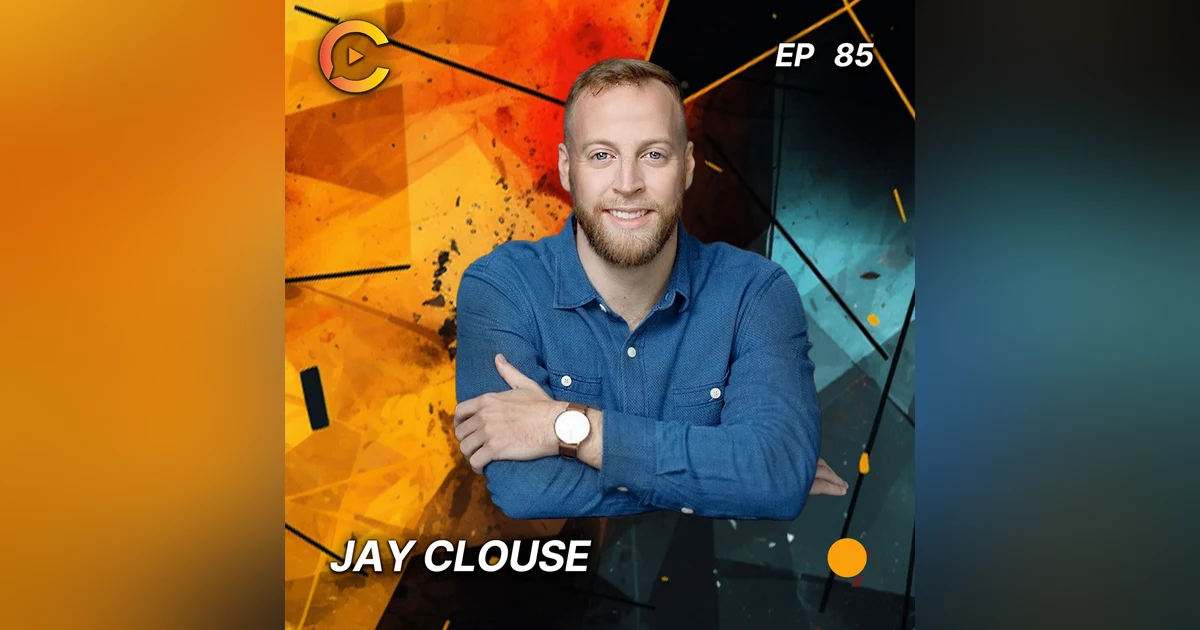

Roberto Blake sits down with Jay Clouse, founder of Creator Science, to delve into the dynamics of monetization, creator economy strategies, and building sustainable revenue. Jay shares his journey from starting Creator Science as a newsletter to expanding into multiple platforms, emphasizing his approach to advanced creator education. The conversation spans monetization techniques, the impact of direct audience engagement, and the nuances of offering high-value products versus brand deals.
Interview with Jay Clouse of Creator Science Covering Advanced Creator Education
EPISODE OVERVIEW:
In this episode, I talk with my friend Jay Clouse the Founder of Creator Science, an award winning Creator Podcast about what Creator Education looks like beyond the basics, and how we can better monetize through memberships and building creator businesses. The conversation goes deep and we talk about the importance of systems and also the impact of building a strong community to support your brand.
Key points include:
The need for creators to view their audience as customers to capture the full value they provide, rather than just relying on ad revenue
Strategies for pricing and framing value, such as emphasizing outcomes and benefits over features
The advantages of starting monetization efforts early and setting appropriate expectations with one's audience
Considerations for entertainment-focused creators versus thought leaders when it comes to membership models and community building
The role of persistence and incremental improvement in building a successful content creation business, versus relying on luck or viral success
Time Stamps and Highlights:
- 00:37 - 01:47: Jay’s origin story, sharing his background and how Creator Science began.
- 02:15 - 04:15: Jay discusses the transition from newsletter to podcasting and eventually YouTube.
- 05:35 - 06:55: Exploring the concept of “relationship platforms” (e.g., email, SMS, private communities).
- 07:10 - 08:50: The value of direct monetization and capturing value from audiences.
- 09:02 - 10:28: Jay’s thoughts on affiliate marketing and the benefits of direct product creation.
- 11:38 - 13:16: Pricing anxiety and the importance of setting boundaries in monetization.
- 14:32 - 15:49: Introducing monetization early on to set consistent expectations with the audience.
- 16:35 - 18:55: Managing perception and value in pricing for creators and entrepreneurs.
- 20:23 - 21:57: Building communities and memberships: content-focused versus community-focused models.
- 23:30 - 24:45: Entertainment creators and business models, like physical products and memberships.
- 26:51 - 28:45: Leveraging membership structures for entertainment creators, including premium content and community.
- 31:05 - 33:30: Jay's perspective on the value of paid education versus freely available content.
- 35:45 - 37:48: Roberto and Jay on the reality of long-term commitment, especially in YouTube.
- 39:10 - 39:55: Final thoughts from Jay and where to find Creator Science.
Brief Guest Bio:
Jay Clouse is a creator, entrepreneur, and the host of the 'Creator Science' podcast, where he dives into the strategies and mindsets of top content creators. Known for his analytical approach and commitment to helping creators succeed, Jay brings a wealth of experience in community building, content strategy, and business growth. His work has made him a trusted resource for creators looking to build sustainable careers, and his podcast has become a go-to for insights on the creator economy. Through Creator Science, Jay empowers creators with the tools and knowledge to turn their passion into a thriving business.
Resources Mentioned:
- Awesome Creator Academy
- Creator Science and The LAB
- Brand Deal Starter Kit
- Spotter Studio
- Kit.com for Email Markting
- Amazon Influencer Program
- Patreon
Sponsors of the Podcast:
1of10 - https://geni.us/get1of10com
1of10 is the BEST tool for YouTube Strategy and helping you find outlier videos that will get more views. Find inspiration for your Topics, Titles and Thumbnails and stop guessing if and idea will get views and start knowing. Use Discount Code ROBERTO at checkout for 50% OFF.
OpusClip -https://geni.us/getopusclip
Repurposing your content to every platform possible, is one of the fastest ways to grow your reach, reputation and revenue. OpusClip uses AI tools for nearly perfect repurposing for short form vertical videos, wide screen clips and can help you with scheduling your content across your platforms, making it automated and easy.
Kajabi -https://kajabi.com/robertoblake
The perfect all-in-one solution for your online business is Kajabi, offering Courses, Cohorts, Coaching and Community all with no-code tools, unlimited video hosting and built-in email marketing!
Visit Awesome Creator Academy and consider joining the Academy Pro Group if you want to become a full-time content creator and increase your Reach, Reputation and Revenue. We have a community of 100 Members just like you who want to learn more and earn more.
We meet twice each week for Office Hours, we offer a library of over 100 Hours of Exclusive Training in all things content creation for our Pro Group Members, and have our Accountability Club where you can check in with your peers and stay on track with your projects.
You can also post any and all questions and get feedback on your work daily through the private group where you peers can offer critique and constructive criticism.
Check out https://www.awesomecreatoracademy.com/group for more details.
You can also join our FREE Creator Foundations Course
If you're looking to just get started and don't want to make a huge investment, but you know you need direction and guidance, check out my book Create Something Awesome: How Creators are Profiting from their Passion in the Creator Economy.
Visit Awesome Creator Academy and consider joining the Academy Pro Group if you want to become a full-time content creator and increase your Reach, Reputation and Revenue. We have a community of 100 Members just like you who want to learn more and earn more.
We meet twice each week for Office Hours, we offer a library of over 100 Hours of Exclusive Training in all things content creation for our Pro Group Members, and have our Accountability Club where you can check in with your peers and stay on track with your projects.
You can also post any and all questions and get feedback on your work daily through the private group where you peers can offer critique and constructive criticism.
Check out https://www.awesomecreatoracademy.com/group for more details.
If you're looking to just get started and don't want to make a huge investment, but you know you need direction and guidance, check out my book Create Something Awesome: How Creators are Profiting from their Passion in the Creator Economy.
0:00 Roberto Blake: Hey everybody. This is Roberto Blake, and today I have the one and only Jay Clouse here, here to talk about monetization, long form and short form and all things creator economy. Jay, welcome to the show, Jay Clouse: dude. Roberto, thanks for having me. Yeah, Roberto Blake: no, awesome. So we've known each other for a while online. We've met in person a few times, great conversations, but you are the man, but for the five people living under a rock in my audience, tell them a little bit about yourself. Give them your hero or villain origin story. Well, it Jay Clouse: begins dark and stormy night when a man and woman, I mean, my parents love each other very much. So my name is Jay. I'm the founder of creator science, and new thing I'm playing with is I'm saying this is advanced creator education. I Roberto Blake: love it.
0:45 I love it. There's a lot of beginner education. So I love advanced creator education. Yes, good standout, because Jay Clouse: I am really big on analytics and data and making data driven decisions. So really, creator science is saying my origin story is someone who did not consider himself creative. And the only way that I've been able to build the following, the attention that I have is because I have been so deliberate in experimenting, learning, innovating and just getting, like, tiny increments better all the time, 1% Roberto Blake: better every upload like we like to say, totally Yeah. So no, that's great. Can you tell us a little bit more about creator science and the lab and what you're doing, and then I'm going to get into specifics around sure monetization options for content creators, because you guys know what I say.
1:31 I'm here to help you improve your reach, your reputation and your revenue, and I think Jay can help us with all of those. But I really want to hone in on the revenue piece. You know, we know that we all need money, which makes world go round. So tell us a little bit more about the business side of creator science, if you don't mind, and the learner. Jay Clouse: So I actually identify as a writer more than anything else. Love it. So creator science started as a newsletter and evolved into a podcast, and it was only then that I realized, like, oh, social media could actually be helpful, and maybe I should try YouTube. So now we're like on all the things, but it started from email and podcasting, which are notoriously difficult platforms to grow. And Roberto Blake: so you actually technically went hard mode from beginning, because email writing extremely hard. Podcasting without previous social media, and for distribution, very hard Yes.
2:22 Then YouTube, yes, the hardest thing out of all content platforms. And so hard mode in the beginning, but nightmare mode from the beginning. And like, Jay Clouse: there's, there's an argument to be made, a really good argument to be made, actually, that like, you should do the hardest things first. Yes, because if you do the hardest things first, then like, you can really snowball your efforts. So I think I lucked out in some degrees, but I also definitely shot myself in the foot in a lot of ways too. Roberto Blake: So Avalanche method, but for creation instead of debt payoff. Dave Ramsey, avalanche versus snowball. Interesting, Jay Clouse: interesting. We're Roberto Blake: doing snowball. You went avalanche? Yes. I think that for those of us who came from previous backgrounds in the industry, like marketing, sales, business, we are kind of more predisposed, I think, or someone with social proof. Let's say you were a lawyer like Emily D baker or legal Eagle. I think those people can take advantage of avalanche as professionals over 30, yeah, versus like creators with no resources or experience over 20s or teens, Snowball Method, yeah. Jay Clouse: I think a lot of people that get into the Creator space, you know you're inspired by the people whose content you were consuming and learning from, right? And so for me, it was a lot of email based creators, and, course, creators.
3:31 So like, I saw that as the path, and it's definitely a path, and it's a good path, yes, but that was the path I emulated. And a lot of the rhetoric in that space is like social media, bad. Social media rented land and like so true, but they were so extreme in that rhetoric that I didn't touch it at all. Oh, wow. And, you know, you come to realize, like everything in moderation, everything has its place. You just need to be you need to know what something is good for to play the game correctly, but in its proper place. Yes. Right sizing. Yes, Roberto Blake: right size. I always say, Make YouTube or make content creation right size. In your life, a lot of people that take over their life totally. A lot of people are inspired by people who've let take over their life, but they never hear the downsides totally. But there's also sometimes too much doom and gloom, too much negativity.
4:18 In your case, the negativity around social media hindered you in the fact that it was a missed opportunity Jay Clouse: for yes correct, like I could have grown so much faster if I would have embraced social media faster. Because it turns out like the best way to grow your email list your podcast is to grow on some other platform that rewards you with free attention, Discovery platforms, as you would like to say, right? Discovery platforms as I like to say, and then redirect that attention towards the systems of distribution that you Roberto Blake: own, the relationship platforms that you would have. What often some people call it relationship platforms, some people call it networking platforms. Yes, I like the idea of relationship platforms that feels better, that feels more humanistic to me.
4:59 Yes. And. And for those watching, you described, I think, examples of relationship platforms very eloquently. Do you want to run us through real quick? Jay Clouse: I think that there's really only four relationship platforms, and you could make an argument for YouTube and call it four and a half, maybe. But I would say email, podcasting, SMS and private communities. These are systems of communication and distribution that you can control. They're reliable means of communicating with the people who have opted into that situation, right? And Roberto Blake: you own the relationship itself, because you have access to the people not controlled by an algorithm. My biggest frustration, yes, right? You have Jay Clouse: direct access to their contact information. They control whether or not they stop hearing from you, not a third party intermediate. And we Roberto Blake: used to call this direct marketing back in the day, and like, in the in the business world, like, you know, things creators don't like like. So let's, let's get into this, because this leads to the monetization piece.
5:53 So the reason that we want to do this is, I call something very similar to, like, what you have, I have, trust, sorry, traffic, trust transaction, traffic, trust transaction, that's how I got three T's. Where's yours? Is your attention? Trust or no? Sorry, awareness. Trust transaction, mine is. Traffic, trust transaction, I'm gonna be honest. I kind of like yours better, but mine has the alliteration, you Jay Clouse: have the acronym that's a little bit better, but, yeah, same same idea, same idea. Roberto Blake: The reason this becomes important is for creator monetization. We need the traffic the platforms provide, and they do give us an opportunity to build trust. But I feel a lot of creators fall down on the transaction part, because they're not pursuing a transaction.
6:38 They're just looking at Platform revenue and sponsorship that doesn't require any commitment from their audience in terms of a transaction. Yep, and I feel that a lot of creators have been socialized in that way by the Creator culture to not sell anything. Oh, you're a scumbag, you're a scammer, you're a sellout. Blah, blah, blah, how dare you ask me for money. It's enough that I give you attention with my eyeballs don't is ad revenue not enough for you? Oh, why is everything sponsored? I think that transactions and the audience voting with their dollars is actually really important totally. And I think that there's a deeper level of intimacy and a commitment between somebody that you've exchanged value with at that level of a transaction. That Jay Clouse: is the key like this is another difference in the world that I came from, which is in the world of direct marketing, of email courses, whatever like, the implicit assumption is that you earn money from the audience. It's a transaction.
7:35 It's an exchange of value, as you said, and so many people from the I would even say, just like video side of the world, yes, they think the model is traffic or attention monetized by a third party sponsor, yeah, Roberto Blake: subsidized by advertisers, beholden is to some degree to the corporations of the ad appliance and the sponsorship that which, those are the same things that's brands paying You instead of customers. But then who are you beholding to them? Yeah, Jay Clouse: exactly. You don't. You don't take their money. They can't tell you what to do. So with your audience, you, you need to be good at value creation, which most creators are, I create value, but you also need to be good at value capture. Yes, and say, I'm creating value for you, and I'm going to capture a small bit of that for myself, and we both come out winners, Roberto Blake: yes, because then I can build more of the thing that you like, and you also get to know that you participated, and have the right to have influence over the way in which I pursue doing it, Jay Clouse: even beyond that, like if I told you I have a button you can press, and if you press this button that I brought to you, you'll earn $5 how much would you be willing to give me to push that button? Like, like, you would probably be willing to give me up to $4.99 because otherwise you wouldn't make anything right. So, like, that's really easy to quantify in in money terms, but the idea is, if you create net new value for somebody, you should be able to capture some of that, and they're still getting net new value, and so are you? Well, Roberto Blake: that's
9:06 that's why I like affiliate marketing for creators. I like affiliate links. Amazon influencer program is the obvious and easy one for to get people get into. But I like the better ones, because then you get more of that value. Because I've always likened it to, if you're an employee, imagine how different your life would be if you had captured 10% of the value created for your employer, yeah, for every dollar you created for your employer, you got a dime, okay? For every $100 you got 10, you know, got 10 spot for you, yep. So how much is your life different if you've made your employer, um, millions of dollars, then in that case, you earned hundreds of 1000s of dollars if you got something like 10 to 30% that's life changing, if you think about it from that perspective.
9:48 Yeah. So as a content creator, you are getting a fraction of the value that you create for advertisers and sponsors on average, but then they don't pursue things like affiliate marketing, and then, well, what's better than 10 or 30% of the value you create? What about nine. 90% of the value you create. Yeah, it's about selling your own product or having your own private Jay Clouse: community. Yeah, yeah. And like, you just gave the sponsorship example, but a lot of times you're creating value for your consumers, the people who are consuming your content. Yeah? And like, there's no reason to believe that you should not be able to have a positive relationship with them while they are also paying you for some of the value they have received. And it's voluntary participation. Voluntary participation. Voluntary participation, obligated to buy anything correct, you know, but you're just like putting the opportunity in, whether that's in a community post or you do your own insert, you act as your own sponsor, you do your own insert in your podcast or your YouTube video or whatever.
10:37 Yes, we're talking about commerce. Like I have a lot of creators who have, like, pricing anxiety. Who talk to me? Talk to me more about that? Well, it's like they worry about the dialog that will happen when they tell their audience they have a thing and here's the price. And I just try to make it like as stark of a comparison as possible. I say you walk into a Starbucks because you want a coffee. There's no barista like twisting your arm and saying you need to get this coffee. It's this is what we have. Do you want it? And you say, Yes, I recognize that the value of having that thing is worth more to me than the cash in my pocket right now. And I transact. That is no different for us. I Roberto Blake: tell creators, you're not saving your audience any money by not selling something. You're just deciding to opt out of that conversation altogether, because somebody's going to get that money so it's not going to sit in their pocket.
11:21 It's going to go going to go to a faceless corporation. It's got to go to Starbucks. It's, you know, going to go to target, it's going to go to someone. And all you're doing when you don't sell to your audience is saying someone is more deserving of your audience's dollars than you, and you're out. And I'm Jay Clouse: reacting and riffing a little bit here, but what you're also saying is implicitly that you don't value your own contribution, and so they shouldn't value your contribution either. I think Roberto Blake: that it's largely imposter syndrome, and I think that's fear based, yeah, and I feel that creators don't feel they have permission to do it, yeah, because they've been socialized by a culture largely of and this is no offense they might the largest content creators have created that culture and created that idea in a lot of their their audience, who looked up to them. And you said it yourself, people become the facsimile to some degree, or who they're inspired by, who their heroes are, who they consumed.
12:13 They want to be like them, yeah. And therefore, to some degree, they don't feel they have permission to do this if their hero didn't do Yeah. Jay Clouse: Now the other thing that we should talk about is, if you do want to sell direct to audience, yeah, I actually think that the best time to do that is ASAP. Like, I think a lot of the backlash, I think people wait till they're a certain size to feel they've earned the privilege to do that, right? But if you wait till you're a certain size because and think you've earned the privilege, what you're now introducing is a new expectation that people might not have had. So also, Roberto Blake: if you start from the beginning, you've socialized the expectation. You've conditioned the expectation, yes, of this is how it you've already, Jay Clouse: like, set the terms of relationship of saying, like, Hey, welcome in. I make things for you.
12:53 By the way, I sell things. And so in the future, when you sell something, that's not a surprise. Roberto Blake: I get it. There's no code switching. No, there's no code switching. Nice. I Jay Clouse: think this is why we saw like the exam, monetize from Day Zero. Monetized from day zero. And it goes even beyond this, like any precedent that you expect to have in the future, like I started a podcast four years ago now, and from day one, we had ad units in there, even if they weren't paid for by sponsors. It could have been just like me saying, like, hey, subscribe to the newsletter. But the idea being, you know that there are promotional messages at the beginning, in the middle and in the and over time, as you earn the ability to sell more paid units, like, it's not a format shift, it's not a change Exactly. Roberto Blake: There's no interruption in service. It's how it has always been.
13:40 Yeah. So there's continuity. I love this. This makes sense. This is consistency from Day Zero. I like this idea. It also means for future proofing and Future Planning, the units are there, the price increases with demand and performance. Okay, so it always is there, and you have predictable inventory, you've set your own destiny. You have a plan in place, yes, for monetization, and we used to just call this, oh, well, what's your business plan? Totally, and creators, and creators, if I ask most creators, well, what's your business model, their answer is ad revenue, sponsorship, and I might get into merch, because that is the pre approved in their mind, in the culture, this is the pre approved model of how you're allowed to make money, and, Jay Clouse: you know, have appropriate expectations for how much you're going to sell.
14:25 But here's the other thing, like easy thing that you can sell in the beginning, from day zero, is access to you. Could be your time. Could be 30 minutes with you, one on one. And if people value that, they will value that. But here's the thing, by nature of having something for sale and nobody knowing how much of it you're selling, people are bound to assume you are selling some amount. So even if, like, from day zero, you're saying, Hey, you can book a one on one call with me, and you don't sell a single call for the first six months, everyone who is aware of the fact that you sell that call has probably assumed that you've sold some of them. Yeah, and that's good. That's like. Getting them to understand there is value in your time, and eventually someone will book it. And you've set that boundary, you've set that boundary, set that expectation, somebody will book it, and now you can have even more confidence Roberto Blake: in marketing it. It's also okay if no one currently qualifies for the boundaries that you've set.
15:15 Say more, because, you know, well, think about it, if you lower the goal post, then you're not getting what you actually wanted instead of your boundaries. When you set your boundaries for saying, This is what this is what it takes to have access to my energy. This is what it takes to overcome my other obligations. If you lower that bar just so that you get a yes, you aren't even getting what you wanted to say yes to yourself, correct your it's a yes for them, but it's really deep down and no for you, yeah because you lowered the bar of your requirements, your desires, your expectations. So the fact that you moved that boundary means that it Yes, it was it turned into a yes for them, but it's not really a less a yes for you, you settled you moved the goal post, you lowered the bar, you rejected your own standard in favor of theirs. I Jay Clouse: had this conversation a lot because people who are developing memberships or courses or whatever, they'll say, Hey, I'm getting feedback from my audience that the price is too high. Should I lower the price?
16:17 And what you need to realize with pricing is there are two components to pricing. There is the price and there is the perception of value that you have created in the mind of the consumer. When someone says your price is too high, what they're actually saying is there is a misalignment between the price you have named and my perception of value, of how much it's worth. So you can lower the price to meet their perception, or you can alter the perception. You can also their perception through your actions. And for some people, so what? What you have to then consider, what are the things they're using to evaluate and determine the perceived value? Yep. And so that may not always be a function. People think that that's a function of features and benefits.
16:58 I would argue that it often is about the perception of status. Could be the perception of status. It could be the way that you literally frame package the value itself, like actually, when you talk about features and benefits, you're usually undervaluing the thing. What you actually want to be talking about is benefits and outcomes. Correct? Roberto Blake: I agree with that. Here's where I'll go on the status thing, because, again, there's such thing as the prestige or premium of a brand, but also the association with that thing. A primary example would be in the Creator space. There are creators, and one of the reasons some of them will actually lower their prices on the negotiation of brand deals is because the perception of what it might look like to be associated with that brand and to be a brand ambassador or featured creator of that company, that perception of prestige and status is enough for a creator to lower their requirements and standards. Oh, I would normally charge 5000 for this, but to work with you, if you need me to what's in the budget, I'll what's in the budget.
17:59 I'll do it and that and that. I don't necessarily have a problem with that, per se, but I just wanted to throw that out there, the fact that somebody's requirements might change. Yeah, if there is something that they value more than money, which is to your point, if they value this thing more than money, and it could be status, or it could be an outcome, yep, if they value that thing more than money, could be access, yeah, could be a network. Could be the association, if they value something more than money, and you know what that thing is? That's the thing to offer. Yeah, Jay Clouse: people value different things. So if they're saying your price is too high, what they're saying is my perception of my values and what I think I'll get from this does not match that price. And it could be saying like, Well, do you know that we are this brand that you want to work with? Do you know that?
18:43 Or do you know that we have these results? Yeah, these results. Do you know that it's like the difference? A lot of times people, especially in the course creator realm, they'll be like, this is a six week live course, and like, that's how they'll frame it. It's like what sounds like work actually, that doesn't sound that's hard for me to value. Like you're asking me to value spending time on something, whereas if you say like this gets you this outcome in six weeks. Now I'm valuing this as a new version of me, a possible future in a short period of time. I value it differently or Roberto Blake: again, the reason I might want that live cohort versus a DIY course is I might want more nurturing. I might want the access, support, the accountability, even, or a time constraint, because what if I'm the kind of person that I'll do a DIY, but I'll spin my wheels and not execute, but if I'm in a cohort, there's assignments, there's a timetable, there's accountability, I have to produce something and show it to the group and be audited on it and have peer review or evaluation. Well, now, okay, hey, present your project to the class. Like, that's a different thing than just turning in an assignment or not even having that option. Yeah, so there's for, I think that with cohorts in particular, and you know this, like, you've done it a lot, like, I think the relationship value in that.
19:59 And. The Accountability aspect of it. That's the, like, a key selling point of this versus that, Jay Clouse: yeah. And on the flip side, I recommend doing live experiences to creators all the time, because you have, there's more margin for error in that. Like, if you're delivering the education and you recognize, oh, I think I lost this person. Yeah, you see it, and you can intervene, and you can still, like, personally, help them get to the outcome, whereas in a self paced version, you're probably just gonna tune out and now that I didn't get anything out of that. Course, do Roberto Blake: you find that also that those live experiences, I'm glad you're saying it's live experiences, and one on one coaching? Do you find that helps for better product development, because you've experienced a variety of problems and a variety of needs that help inform the more broad thing that you're making. Generally, Jay Clouse: I would just say it's a tighter feedback loop, because you get to apply your your method to a real situation, and you get to see what happens from there, because you're watching in real time as they apply it. So like you see body language, you hear objections, you hear questions that are asked.
21:07 You see where people's eyes light up or their eyes glaze over. So like the feedback loop of learning, am I explaining this well? Am I explaining it in the right order? Am I explaining it comprehensively? You learn all that by delivering these things live and seeing somebody react. And once you start seeing a pattern of like, okay, every time I deliver this live in this order, in this way, it just works, that's when you can start saying, let me produce it. And that's Roberto Blake: not abstract in the way that maybe even a survey, a survey has a limited scope of questions, versus this feedback loop has more variability, in the sense that people aren't limited in the type of feedback they can give or to a specific question set. So it also takes some bias that your own exit survey might have if you sell a course.
21:51 So I think that's that's good feedback and value. But let me ask you a question. You've coached a lot of different creators. We've talked a lot about monetization models that I think lend themselves better to thought leaders, per se, versus influencers who might be in the entertainment sphere. Because, like, one of my things in the dichotomy of like, okay, well, what is a creator is, well, you could have, well, there's really three paths, but most people focus on two, the thought leader path, which is professionals that you know, Andrew Huberman, for example, James clear, obviously thought leaders. We would be thought leaders. But then you have influencers, which would be the entertainment base, which is your like, your Mr. Beast, your Logan Paul's, what have you.
22:32 But then I would say there is a third path that might be more abstract than both that well, there are people who are artists, who then just happen to monetize what they're doing as creators, per se, yeah, but that matter, the expression aspect would matter more to them, versus, I would say that, um, the influencer optimizes probably around. They want the validation, they want, the wreath, they want, the big numbers. And then I would argue, to some degree, maybe the business is a secondary like priority to some degree. I think that thought leaders, not all, but most probably, come from a professional realm where they are intrinsically thinking equally about reach and revenue.
23:13 I think artists would like either, but they just really want their thing to exist. Yeah, if we will look at influencers who are entertainers, what would you say, and what monetization advice would you offer to them? And what business model do you think works for those Well, I'm Jay Clouse: not gonna say don't do advertising or brand deals like, yeah, of course it works. There's a lot of precedent for it, but it's also like, in some ways unreliable. So I'm always trying to say, what is the direct form of monetization, I can find that's just a pure transaction between me and my audience, right? And it is tougher in the entertainment realm than the education realm, yes, because you're probably not going to do a course or some sort of like info product, but I am inspired by people who do some form of physical product, and like you have the extreme examples like feastables and joy ride or whatever, right?
24:03 And, yeah, I think there's a really interesting thing happening right now that we saw with like Marques Brownlee, where, like, you have brands that don't have a face and faces who don't have a product, and like, they meet, and that's, like, really cool, yeah. And Roberto Blake: we saw this before that, even with Peter McKinnon. So we have Marcus Brownlee, Peter McKinnon, with these kind of partnerships. I just seen with blue, Condor or Condor blue. Sorry, Condor blue. So I love this idea. I think it becomes to some, would you agree that this could be extension of what starts with a traditional brand deal relationship, Marquez in particular, and Justine as well. So I feel like that becomes a natural progression or extension of something creators are familiar with. Here's another form of brand partnership that. Extends outside of just triple sponsored content. Yeah, to product partnership, yeah. I Jay Clouse: think, I think creators can kind of approach brand deals the same way that Amazon approaches Amazon originals.
25:12 You know, where it's like, I have a sense that my audience cares about this type of product, let me partner with a brand that provides it. And if that proves to be true, consider developing your own. Or, you know, go to them and say, I think I might develop my own, or cut me in, like, let's be partners on this. Yeah, because, like, doing manufacturing and producing a product that's a huge, that's a big undertake, creators typically don't have specialization or expertise. It's, like, inaccessible to somebody who hasn't done it before. So it's easier to work with somebody who already has a systems built, and you have, like, a percentage you're on the board. Percentage, you're on the board, you're on the cap table. That's like ideal, and I think you can wade into that with affiliates or brand deals to start. So I think that's like a good place to start. But I also think that most entertainment based creators have an opportunity for memberships. I wanted that Roberto Blake: for sure. I would agree with that the success of Patreon is a platform.
26:01 Jack Conte, great entrepreneur, yeah, Jack, if you're watching, yeah, we'd love to have you on, but I believe you spoke with Jack Conte and other folks in the development realm around memberships. What would your advice be to entertainers? And then we could circle back to thought leaders on approaching memberships, because a lot of entertainers don't get like the inside baseball on this, yeah, Jay Clouse: I mean memberships, you have to think about what is my audience value? How do I form this so that it doesn't take over my life? And I would put memberships on a spectrum between, is this premium content focused, or is this like relationship focused, so access? Well, I would even say relationships between members.
26:44 So community, yes, like, do you want to be more peer to peer and the value that you're promising, or do you want to be more premium content? And most memberships will offer a blend of both, but you're going to want to go one side or the other. Primarily interesting when you do peer to peer, and you're like, This is a community for this type of person, and we make the experience really good for people who care about this thing. You can tend to charge higher prices for that, because that's a harder thing to pull off. I'd agree retention is higher more difficult to market, though, Roberto Blake: community is more unique than any product offer, yes, yes. But Jay Clouse: like, in opposition to SAS. Like, yeah, to continue to create value in a community, you have to, like, just foster the conditions.
27:27 It's You're never done. You're never like, Okay, we did it. Like the community exists and it's great. Like, you have to continue. It's like, it's like pool chemistry, like you can get the community can be off balance, and things can go bad. There's no like, I made it. It just works. You have to continue to foster whereas, whereas with SAS, there's a there's a baseline, baseline utility, a baseline utility that's pretty static, that's pretty static that, like it will continue to solve that problem in that way. But community, if it's peer to peer, especially like you have to continue to help me form relationships and make this a place that I want to spend my Roberto Blake: time. And it has to be the culture has to be maintained. It has to be curated. It's Jay Clouse: ultimately out of your hands. You can't, you can't control fully if people are participating, if relationships are being made, if you do premium content, you can control the fact that you're going to make more premium content, right? So that's a little bit safer.
28:17 Roberto Blake: So you're choosing essentially between content as a service or community as a service? Yes, yes. Jay Clouse: And a membership, that's generally what you're trying to do, interesting. So I think most entertainment based creators, especially, are more on the side of content, because content is like basically creating extended access to you. Yes, sometimes you will do live sessions, and that's special and unique. Content based memberships tend to be lower priced. You're going for scale? Yep, they tend to be higher churn, yes. But you know, if you go that way, like there is more control, and I think most creators can design a membership where there is extended access to you, more content from you, but it's controlled, and how much time you're putting into it, yes.
28:59 And so it's Roberto Blake: a scale. It's a more scalable and easier to sustain model, yes, but it also, again, requires it to be a lower premium, yes, for access. So it's like volume of transactions versus value transactions. And so that's a volume based model. And then the value based model is community. Yes, that's Jay Clouse: that's a good way to put it into so you have to decide where you want to fall on that framework, and generally, like a lot of people will run the math and realize, Okay, I'm gonna charge $5 a month my Patreon. I have a good audience, but, you know, we've got 100 people, and that's a great outcome, but that's $500 per month, and I'm putting all this time into creating new stuff, and it just doesn't make sense. It's like it doesn't feel sustainable, because it doesn't feel like it's rewarding you for the amount of effort that's required. So when you introduce a membership, is a key question to make sure that it is financially incentivizing for you to do the work necessary to make it good enough that people stick around. Roberto Blake: No, that makes perfect sense, because the churn rate is the thing that would be up with. And stand for those not familiar with churn rate, we're talking about, are you losing more members than you're gaining month over month?
30:06 Yeah. And is that net positive? Yeah. So. And are you maintaining the numbers and retention of what like you have, as far as your community? So that's, I think that's very interesting. Let's get into a little bit of that around education based content. One of the pushbacks on education based content, whether it's courses or even cohorts or communities, is there's this belief that everything that you ever need is already accessible. Why would you pay for it? What are your thoughts on that argument around this? Yeah, Jay Clouse: I mean, I would also say that you could, you could change your own toilet, or you could hire a plumber. You know, we value time and efficiency as a species. We just do, yeah, so, like courses are about time and efficiency if you would like to learn something better faster than trying to do it on your own. If you have to curate the information, to curate it, not just curate it, but also order it. Yeah, Roberto Blake: so I'd have to curate it, create continuity. I'd have to consolidate it.
31:11 I'd have to that's a lot of effort before I even consume the thing that I want and execute on. It's Jay Clouse: a lot of effort to understand, like, what should I pay attention to? How do I curate it? What order should I consume it in? And like, what do I lend credibility to so yes, you could do all of that. You can do it. How Roberto Blake: much of that do I have to do to distill it down these things? And how would I know that I've done that effectively Jay Clouse: totally and why would you believe that you can do it as effectively as somebody who's been doing it for years and has already immersed it like the best course I've ever taken, by far, Roberto Blake: and had other people vet it by hack, then other people have bought it. Yes, best course Jay Clouse: I take it by far is Seth godins marketing seminar. Okay, hour for our incredibly value, and this is this man's 30 years of marketing experience distilled into one course.
31:56 Like you can have Seth godins 30 years of marketing experience distilled into one chorus, yes, you could probably go through his entire archive of everything he's ever done, but some of that's going to be dated, some of that he's changed his own mind on. So it's just, yes, you can do it for free, but it's inefficient. At some point you need to value your own time. Roberto Blake: I think that time is the most irreplaceable thing. I think there's a over I think people I'm speaking for myself when I say this. I've had various incarnations of a unhealthy relationship with money that comes from scarcity, bad experiences growing up without money, being an adult that didn't have money, all kinds of debt. It creates these money traumas that I think then skew the lens of how we perceive money, and we think that, Oh, if we spend this money, this money will never come again. But inevitably, if we work hard, it does, if we're consistent, it does.
32:48 If no tragedy happens, it does. And often we've spent more money on more useless or worthless things than the things that are in personal development. I feel like books are always a good investment of money. I feel like a gym membership tends to be a good investment of money and everything like, I mean, your evidence right here, Jay Clouse: I've put a lot of money into the home gym. Yeah. Roberto Blake: So the I feel like personal development, which gets a bad rap, self improvement, I think career development. I think if you were trying to do anything like, for example, outside of content creation, people understand the investment of career development, and how many 1000s of 1000s of dollars. But I think in our industry, a lot of people take for granted this idea, because in their mind, there's this perception behind the scenes that this is very luck based, which I would disagree with.
33:34 I think that most things that are broadcast as luck are undisclosed privilege, undisclosed nepotism, undisclosed resources. I don't think enough credit goes to teams that are behind people, tools that are behind people, and to opportunities that were not given to everybody a lot of times. And Jay Clouse: if you pawn things off on luck, that's a very disempowering belief. I agree. Because if you just believe things are luck, then like, what? What reason is there to do anything? I Roberto Blake: take it to a weird extreme. When someone says they're lucky, I don't think they're being humble. I think they're trying to say that God loves them more than you. Yeah, that's a mic drop, right? But, but thing is, think about it, if it's not in your control, then it's in the control of something bigger and more powerful, and it's picking winners and losers. Yeah, I would never want to believe that message. I Jay Clouse: mean, like, chance and probabilities are a thing, yeah, and sometimes those play in your favor. But there are other ways to like, improve your odds. You can stack the deck, yeah, your favor. There's a lot you can do to like, be more probabilistic to get the outcome that you want.
34:37 Roberto Blake: Yes, I think that the rarity of outcomes that people look at also is a rarity of inputs. And the thing that also convinced me this, and I'd love your thoughts on this as we start to, you know, wind things down, but like, if you look at AI, for example, its outputs are only as good as its inputs. You cannot be somebody who's like, you know, if someone's already smart, this thing will have exponentially more valuable to them. That if they're below average, and I think that a lot of things are the difference between a lot of undisclosed effort that is above average or outlier effort, meaning that, I think that it's under reported how many hours people put in doing something to get like most people do not understand that a lot of the successful content creators that they see, it's their third or fifth YouTube channel, yeah, and they've undisclosed to you.
35:26 You saw them and ran into them when they're 18. They've been trying to since they were 12, and they failed their way up. Yeah. Jay Clouse: And even while they were failing, they were learning things that allowed them to do things in smaller amounts of time, and like time savings compound. They Roberto Blake: do they but that's with everything. That's with athleticism. And no one talks like, think, if you think about it, just realistically, the more you work out, the more you do an exercise, the more you do a martial art, the effort compounds. And the thing becomes easier due to muscle gain, muscle memory, repetition, the fact that you're disciplined in your mind, of like, okay, this isn't so bad, becomes a thing. A lot of people don't. If I put it into real terms for content creators, Mr. Beast made 460 videos to get to 10,000 subscribers. Do you realize how abnormal it is to keep going? If you have, if you make 460 videos on YouTube, try your little heart out, and you don't even get to 10,000 subscribers, you realize how many people would give up? Jay Clouse: Oh yeah.
36:20 Before they hit 400 videos, I would have given up at video six they. Roberto Blake: A lot of them give up, most people, even if they, most people give up at video 100 if they do not hit the outlier thing, if they don't hit 10,000 subscribers by video 100 they give up. And the reason I know this is because that has been audited. 90% of creators never hit 10,000 subscribers. About roughly, depending on what you want measure is active channels. You could argue between three and 6% monetize, because, according to CEO Neo Mohan, 3 million globally in the partner program, there's over 100 million channels on YouTube globally. Social Blade only tracks about 69 million of them.
37:01 So people look at that as the active channel number, okay, if I go with the conservative version, 6% of all people in the world who try to do YouTube get monetized, and get the partner program and get, you know, the watch hours and the monetization. And that's after they lowered the bar, by the way, in the to 500 subscribers and 3000 watch hours. Okay, so it's between three and 6% like, Okay, that's pretty devastating. That sounds bleak. That sounds like, yeah, you're saying it's a lucky break, but it's not. It's that most people don't qualify because they quit too soon. Yeah, Jay Clouse: you gotta think, am I going to put in more effort than 94 to 97% of people? And actually, that's very achievable. Most people do not put in extraordinary effort.
37:43 They don't, yeah, I Roberto Blake: think that's been provably true. I mean, it sounds harsh, or it sounds elitist to say, but it's, no, it's provably true, yeah, because we can measure it. Yeah, Jay Clouse: the bar is, like, low for trying, but like, the the wind does not come from simply the activity. You can't simply upload a video and think, Well, if I do that 100 times, I get the outcome. You have to like work to make every video better. Roberto Blake: Of improving, it's the improvement by at least 1% every time one new thing learned every time it's the natural progression. And that's why I liken it to things like athleticism or artwork or just even any form of personal development self improvement that you do. It's improvement that you do, it's the compounding of the effort with the intent of improving and becoming more effective, more efficient. It's becoming a better editor, a faster editor, a better script writer, a better on camera.
38:34 I sucked on camera like even learning to perform, even learning how to speak. I sucked on camera. I sucked at public speaking. I improved with effort over a duration of time. Jay Clouse: Yep, and that improvement is a decision. Roberto Blake: It that is a choice that you that is the controllable variable out of the things you were talking about, because you went to controllable variables, like how you can control, for example, your the price that you set, you can control that you can control certain levers in the perception of your value by, you know, improving on a thing, and understand it's a choice to understand what your audience values and why and so on and so forth. So no, I would agree with you on that. So Jay, where can everyone find you and learn more about your content and resources?
39:14 Jay Clouse: Right here on YouTube. Search. J Klaus, the channel is called Creator science. The handle is at creator science, y t because someone got to add creator science before me. Otherwise, you know, search for creator science wherever you like to consume your things. Do Roberto Blake: you have some final thoughts or something you want to talk about today before we wrap up? Jay Clouse: Yeah, if I were to ask everybody watching us to do one thing, well, maybe two things, it would be to like and subscribe. Nice you.